A special person listed in the dictionary
Since this year’s MLB schedule ended, several new managerial and coaching appointments have been announced. Some of these announcements have been what I consider to be rare or bold, such as Kurt Suzuki being named the new manager of the Los Angeles Angels and Tony Vitello being named the new manager of the San Francisco Giants.
Kurt Suzuki, who played as a catcher in the major leagues for 16 years, retired in 2022, only three years ago, and he's still young at 42. It's fair to say that Kurt Suzuki is younger than usual for a manager....There’s even a 42-year-old active major leaguer, Justin Verlander.
Since retiring, Kurt Suzuki has served as a special assistant to the general manager for the Los Angeles Angels, and has no coaching or managerial experience in either the major or minor leagues. It's probably safe to say that it's rare to appoint someone like this as a manager.
To avoid any misunderstandings, I want to say this: I hope Kurt Suzuki will be successful as a manager. He's a third-generation Japanese American, and he played battery with my favorite player, Shohei Ohtani, on the Angels, so I've always felt a sense of affinity with him.
The Giants' new manager, Tony Vitello, has had an impressive track record as manager of the University of Tennessee baseball team, but he has never played professional baseball or coached for a professional team. I think this kind of managerial appointment is a very American thing, and I love and admire that kind of America. In Japanese professional baseball, they would never do something so bold and unconventional, and they would never even think about it.
I sincerely hope that Tony Vitello will be successful as a Major League manager.
Now, there is one man in Major League Baseball whose managerial appointments were rarer, bolder and more unconventional than either Kurt Suzuki or Tony Vitello. It's hard to imagine a rarer, bolder and more unconventional managerial appointment than that. It happened with the New York Yankees.
George Steinbrenner passed away in July 2010. He was a very well-known figure who had been the owner of the New York Yankees since 1973. There was one person who was famous for having repeated conflicts with George Steinbrenner: Billy Martin.
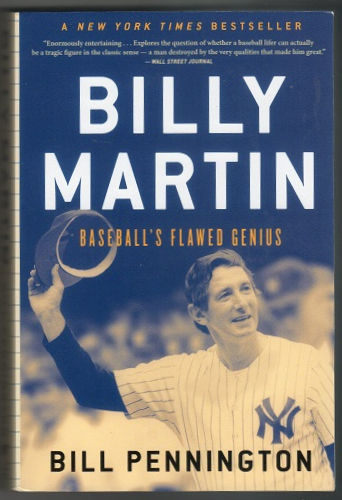
After playing for the Yankees, Billy Martin played for six teams before retiring in 1961. He then managed a minor league team and three major league teams before being hired by Steinbrenner as manager of the Yankees in 1975.
It seems that Billy Martin was said to be an unconventional man. Even during his playing days, he was known for his love of alcohol and quick temper, and was said to have frequently gotten into brawls. It seems that this was the same after he became manager of the Yankees, and he was said to have even gotten into a huge fight on the bench with the owner's favorite key player.
In the end, Billy Martin ended up being hired five times by Steinbrenner as manager of the Yankees, and fired five times. It's amazing that Steinbrenner would do something like that, and it's also amazing that Billy Martin would accept it. I think that Billy Martin maintained a strong love for the Yankees.
In Japan, many people describe George Steinbrenner as arrogant and eccentric, as he was known for even commenting on players' clothing and beards. However, I quite like him, and I believe he's not as weird as people say, but rather a fun and entertaining character. For example, Steinbrenner appears as himself in the film “The Scout” (1994), where he delivers some very funny, self-deprecating lines with ease and great skill. This is something that someone who is simply unconventional could never do.
What I write below should give you an idea of what I think about Billy Martin.
When Billy Martin died in a car accident on Christmas Day 1989, it seems that many news articles appeared highlighting his unconventional side, such as his love of alcohol and short temper. However, Bob Greene wrote a heartfelt column that is completely different from those articles. It was a column titled "The Dream Legacy of Billy Marin" that appeared in the Chicago Tribune on December 31, 1989, six days after Billy Marin's death.

So, what was in that column? The town where Bob Greene was born and raised never had a major league baseball team. But in the mid-1950s, the Yankees came to town for an exhibition game. While none of the team's main players showed up, Billy Martin did and played hard. It was like a dream come true for the young Bob Greene. Billy Matin seems to be a special person to Bob Greene.
I was born in 1947, the same year as Bob Greene. In 1955, at the age of eight, I went to see a live game at the stadium when the Yankees came to Japan. Billy Martin, a slender infielder, was playing with all his might. He didn't seem to be the slightest bit of a drinker or quick to fight. It was like a dream come true for me. Since then, I've become an avid Major League Baseball fan...Billy Martin is a special person to me too.
Bob Greene and I aren't the only ones who think of Billy Martin as a special person.
When Billy Martin was manager of Oakland Athletics, he led the team in an aggressive style of baseball that greatly pleased fans. Some people believe this style of baseball to be special, and have named this baseball style "Billy Ball" passing it down to future generations.
The word "Billy Ball" appears in many standard English-Japanese dictionaries sold in Japan. It is extremely unusual for a word derived from a Major League Baseball player to appear in a standard English-Japanese dictionary. Apart from Billy Martin, there are very few other Major Leaguers whose names appear in the many standard English-Japanese dictionaries sold in Japan. From what I've researched, the only ones that appear are Babe Ruth and Joe DiMaggio.
Furthermore, there is the American film "Ocean's Thirteen" (2007), which stars popular actors such as George Clooney and Brad Pitt. In the middle of a conversation between the characters, the line "Billy Martin" suddenly appears, seemingly unrelated to the rest of the conversation. People unfamiliar with the history of Major League Baseball seem to have been completely confused by this line. I think that since Billy Martin was fired as manager of the Yankees, he was rehired and given a second chance, so "Billy Martin" is used as slang for "giving someone another chance." I also think that the people who made this film had a special attachment to Billy Martin, and that's why they came up with the new slang term "Billy Martin" to use.

This slang term is not yet widespread enough to be included in dictionaries. I sincerely hope that it will one day be included in many standard English-Japanese dictionaries sold in Japan.
( If I’ve made a mistake or left out something important, please let me know. I’ll try to make corrections or additions.)