3,000 Career Hits and Hits in a Season
My initial interest in 3,000 career hits in Major League Baseball was sparked by Stan Musial (who died in 2013 at the age of 92). My interest in 3,000 career hits grew stronger, and I became interested in their relationship to single-year hits, thanks to Al Simmons (who died in 1956 at the age of 54). And with the move of our Japanese hero, Ichiro, to Major League Baseball, my interest in the relationship between 3,000 career hits and single-year hits increased even further.
This time, I’d like to begin by briefly touching on these three players.
First, Stan Musial.
In the fall of 1958, the St. Louis Cardinals came to Japan to play against Japanese professional baseball players. I was 11 years old at the time, and I watched one of those games live at the stadium. My main reason for going was to see Stan Musial. Until then, I had never even heard the name Stan Musial, but when I saw and heard the extensive media coverage of him upon his arrival in Japan, I learned for the first time that he was a top-class player who had led the league in batting average seven times and recorded a batting average of over .300 for 16 consecutive years. Furthermore, I learned that he was also famous for achieving the remarkable feat of 3,000 career hits. This surprised and impressed me the most, and sparked my interest in 3,000 hits. Then, I was even more surprised and impressed to learn that there were other incredible players in Major League Baseball besides Stan Musial who had achieved over 3,000 career hits. ...Two years before Stan Musial’s arrival in Japan in 1958, in 1956, a player named Tetsuharu Kawakami achieved the first 2,000 career hits in Japanese professional baseball history, but achieving 3,000 career hits was unthinkable in Japanese professional baseball.
Here, there is something I absolutely must mention. In Japanese professional baseball, there is only one player who has achieved 3,000 career hits. In 1980, Isao Harimoto achieved this feat (ultimately accumulating 3,085 career hits). Harimoto led the league in batting average seven times and had 16 seasons with a batting average above .300. Furthermore, he also achieved 500 career home runs (Stan Musial’s career total was 475). Achieving 3,000 hits and 500 home runs in Japanese professional baseball, which has fewer games per year than MLB, is truly remarkable. Harimoto also achieved a career batting average of .300, 300 home runs, and 300 stolen bases. Of course, this is a feat achieved by only one person in the history of Japanese professional baseball. Even in MLB, only Willie Mays has achieved this. This might lead one to believe Harimoto was a versatile player on par with Mays, but unfortunately, unlike Mays, Harimoto had weaknesses in defense. Nevertheless, there’s no doubt that Harimoto was a great player.
Next is Al Simmons.

My interest in Simmons began in 1990 when I read a certain book. That book was the Japanese translation of “To Absent Friends from Red Smith“ (1982, Scribner) by Red Smith (who died in 1982 at the age of 76), a renowned sports writer who also won a Pulitzer Prize. A surprising and thought-provoking column about Simmons is contained in this book: Simmons, hailing from Milwaukee, Wisconsin, knew he was a great player and a celebrity. People called him “The Duke of Milwaukee“ and he behaved with the arrogance befitting such a person. He was proud of being called that. Despite all that, he just couldn’t reach 3,000 career hits (his career total was 2,927). He struggled with this and deeply regretted it. He thought that if he had imagined beforehand that he would come so close to 3,000 hits, he would have worked hard enough to achieve it, and he regretted so much that he wanted to slit his own throat when he remembered the days he was lazy or when he faked illness to get out of the lineup.

Al Simmons is a legendary player who has been inducted into the Baseball Hall of Fame and has achieved 200 or more hits in a season six times (including five consecutive seasons). It’s surprising that such an excellent player hasn’t achieved 3,000 career hits, and I was surprised to learn for the first time how deeply he regretted it, but I could understand his feelings. After reading this book, I’ve come to realize that there are players who are desperately trying to extend their playing careers and avoid retirement in order to achieve 3,000 career hits. For example... no, I won’t mention names as it would be rude. Most of those players ended up retiring without achieving 3,000 career hits. Do they regret it as deeply as Simmons? Even if that were the case, I would never despise them, just as I would never despise Simmons. No one looks back on their life without regrets.
Incidentally, there are seven Major League players who have achieved 200 or more hits in a season for five consecutive years or more, but only two of them are right-handed hitters. Al Simmons and Michael Young (who retired after 2013) achieved this for five consecutive years.
Next is Ichiro.
In 1994, the year of his sensational debut in Japan, Ichiro surprised us fans by saying he aimed to achieve 200 hits in a season. Until then, Japanese baseball fans had focused on batting averages and home run counts, but had never on the number of hits in a season. And that year, Ichiro achieved the first 200 hits in a season in Japanese professional baseball history. After moving to Major League Baseball in 2001, he even set a Major League record by achieving 200 or more hits in a season for 10 consecutive years. During those ten years, Ichiro didn’t effortlessly achieve 200 hits every year. He felt the pressure of being expected to hit 200 or more hits a year, and he experienced slumps, but he continued to work hard to overcome them. ...There is a wonderful book that conveys these efforts of Ichiro. It’s a compilation of long interviews conducted annually by Japanese sports journalist Yuta Ishida with Ichiro. “Ichiro Interviews: Complete Edition“ (in Japanese, Bungeishunju, Co., Ltd., March 2026). I sincerely hope that this wonderful book will be translated into English so that Major League Baseball fans in the U.S. can also read it.

Despite achieving 200 or more in a season for 10 consecutive years, Ichiro was unable to reach 3,000 career hits for quite some time. I worried that his late start in Major League Baseball (at age 27) might be a factor, but he finally achieved 3,000 career hits at age 42.
I was worried about whether Ichiro, who has achieved 200 or more hits in a season for 10 consecutive years, would be able to reach 3,000 career hits, so my interest in the relationship between 3,000 career hits and season hits grew stronger. I decided to investigate it myself.
Now, there are a total of 20 players in Major League Baseball history who have achieved 200 or more hits in a season five or more times. Table 1 summarizes whether these 20 players have achieved 3,000 career hits, their age at their MLB debut, and their number of years as active players.
Table 1
3,000 career Hits | MLB debut age | Number of years as an active player | |
Pete Rose(10) | ○ | 22 | 24 |
Ichiro(10) | ○ | 27 | 19 |
Ty Cobb(9) | ○ | 18 | 24 |
Willie Keeler(8) | × | 20 | 19 |
Lou Gehrig(8) | × | 20 | 17 |
Paul Waner(8) | ○ | 23 | 19 |
Derek Jeter(8) | ○ | 21 | 20 |
Wade Boggs(7) | ○ | 24 | 18 |
Rogers Hornsby(7) | × | 19 | 23 |
Charlie Gehringer(7) | × | 21 | 19 |
Sam Rice(6) | × | 25 | 20 |
Al Simmons(6) | × | 22 | 20 |
Stan Musial(6) | ○ | 20 | 22 |
Bill Terry(6) | × | 24 | 14 |
Steve Garvey(6) | × | 20 | 19 |
Jesse Burkett(6) | × | 21 | 16 |
Michael Young(6) | × | 23 | 14 |
Tony Gwynn(5) | ○ | 22 | 20 |
Kirby Puckett(5) | × | 24 | 12 |
Chuck Klein(5) | × | 23 | 17 |
( ): number of times with 200 or more hits in a season
Surprisingly, 12 out of 20 players have not achieved 3,000 career hits. All 20 of these players are undoubtedly outstanding at hitting, so why is this the result? The age at which they debuted in Major League Baseball doesn’t seem to be a factor (Ichiro is the only one who stands out for being relatively late, at 27 years old). However, it is safe to say that the number of years they played in Major League Baseball is a significant factor. Of the 12 players who did not achieve 3,000 career hits, 9 played for less than 20 years, and of the remaining 4, 3 played for exactly 20 years. Only one (Rogers Hornsby) played for 23 years. The same can be said for the 8 players who have achieved 3,000 career hits. Of those 8, only 3 played for less than 20 years (Ichiro, Paul Waner, and Wade Boggs), and all three of these players are exceptionally talented, having recorded 200 or more hits in a single season at least 7 times. The two players who achieved 3,000 career hits with fewer than seven seasons of 200 or more hits (Stan Musial and Tony Gwynn) had careers of 20 years or more. Pete Rose and Ty Cobb are exceptions, as they both achieved not just 3,000 career hits, but 4,000, despite having 10 and 9 seasons of 200 or more hits respectively, and having long careers of 24 years.
In summary, excluding exceptionally talented players who have achieved 200 or more hits in a single season seven or more times, even if a player achieves 200 or more hits in a single year multiple times, it seems that he would need to continue playing as an active player for 20 years or more to reach 3,000 career hits.
Table 2 summarizes the age at which the 33 players achieved 3,000 career hits made their MLB debut, their age when they achieved 3,000 career hits, and the number of times they achieved 200 or more hits in a single season.
Table 2
MLB debut age | Age at the time of achieving 3,000 career hits | Number of times with 200 or more hits in a season | |
Pete Rose | 22 | 37 | 10 |
Ty Cobb | 18 | 34 | 9 |
Hank Aaron | 20 | 36 | 3 |
Stan Musial | 20 | 37 | 6 |
Tris Speaker | 19 | 37 | 4 |
Derek Jeter | 21 | 37 | 8 |
Carl Yastrzemski | 22 | 40 | 0 |
Honus Wagner | 23 | 40 | 2 |
Albert Pujols | 21 | 38 | 1 |
Paul Molitor | 22 | 40 | 4 |
Eddie Collins | 19 | 38 | 1 |
Willie Mays | 20 | 39 | 1 |
Eddie Murray | 21 | 39 | 0 |
Nap Lajoie | 22 | 39 | 4 |
Cal Ripken, Jr. | 21 | 39 | 2 |
Miguel Cabrera | 20 | 39 | 1 |
Adrian Beltre | 19 | 38 | 1 |
George Brett | 20 | 39 | 2 |
Paul Waner | 23 | 39 | 8 |
Robin Yount | 19 | 36 | 1 |
Tony Gwynn | 22 | 39 | 5 |
Alex Rodriguez | 19 | 39 | 3 |
Dave Winfield | 22 | 41 | 0 |
Ichiro | 27 | 42 | 10 |
Craig Biggio | 22 | 41 | 1 |
Rickey Henderson | 20 | 42 | 1 |
Rod Carew | 22 | 39 | 4 |
Lou Brock | 22 | 40 | 4 |
Rafael Palmeiro | 22 | 40 | 1 |
Cap Anson | 19 | 42 | 0 |
Wade Boggs | 24 | 41 | 7 |
Al Kaline | 18 | 39 | 1 |
Roberto Clemente | 21 | 38 | 4 |
This table shows that, with the exception of Ty Cobb, who made his MLB debut at age 18 and achieved 3,000 career hits at age 34, all of the remaining 32 players achieved 3,000 career hits between the ages of 36 and 42, largely unrelated to their MLB debut age. More specifically, 21 players achieved 3,000 career hits between the ages of 36 and 39, and 11 players achieved 3,000 hits after age 40. The number of seasons with 200 or more hits doesn’t seem to have a strong correlation with the age at which they achieved 3,000 career hits. However, the four players who had never achieved 200 or more hits in a season achieved 3,000 career hits at a later age (one at age 39, and three after age 40, at the latest by the age of 42).
Finally, let’s look at active players based on the findings so far.
Table 3 summarizes the top 5 active players in career hits (the career hit totals for these five players are as of the end of last season). Furthermore, these five players were the only ones to have achieved 2,000 career hits at the end of last season.
Table 3
Career hits | MLB debut age | Number of times with 200 or more hits in a season | Current age | |
Freddie Freeman | 2,431 | 21 | 0 | 36 |
Jose Altuve | 2,388 | 21 | 4 | 35 |
Andrew McCutchen | 2,266 | 22 | 0 | 39 |
Paul Goldschmidt | 2,190 | 24 | 0 | 38 |
Manny Machado | 2,069 | 20 | 0 | 33 |
I’d like to consider whether these five players can reach 3,000 career hits. ...I know it’s very presumptuous and rude to do something like this, but as a fan, I’m interested, and I have plenty of respect for these five players, so please forgive me.
Of these five players, only Jose Altuve has achieved 200 or more hits in a season, but only four times, not seven or more. This means that, following the precedents mentioned earlier, he would need to play for 20 years or more as an active player to reach 3,000 career hits. The remaining four have never achieved over 200 hits in a season, so, following the precedents, they would reach 3,000 career hits at the earliest at age 39, and usually after age 40, at the latest by the age of 42.
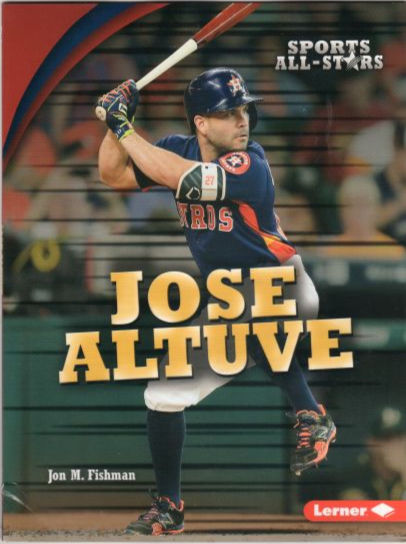
Considering these conditions, along with their current ages and career hit totals up to last year, Altuve seems to have the highest probability of reaching 3,000 career hits, followed by Freeman. Machado’s career hit total is still about 1,000 away from 3,000, and he’s still young at 33, so it’s difficult to predict, but if he continues playing until he’s 40 or older, he might reach 3,000 career hits. Considering McCutchen and Goldschmidt’s current ages and career hit totals up to last year, even if they continue playing until they’re 42, it seems quite difficult for them to reach 3,000 career hits.
These are all my personal, arbitrary predictions based solely on past examples. Only God knows whether these predictions will come true.
(If I’ve made a mistake or left out something important, please let me know. I’ll try to make corrections or additions.)